FIRST DIVISION MUSEUM AT CANTIGNY
Hamilton’s 5th Field Artillery: 250 Years
Following our work on the Nothing But Victory D-Day exhibit for the First Division Museum, Bridgewater was invited back for a new project commemorating America’s 250th anniversary. Hamilton’s 5th Field Artillery: 250 Years traces the U.S. Army’s oldest active unit from 1776 to today, offering a new opportunity to turn an expansive military history into a compelling and engaging experience.
The Challenge
Strategy
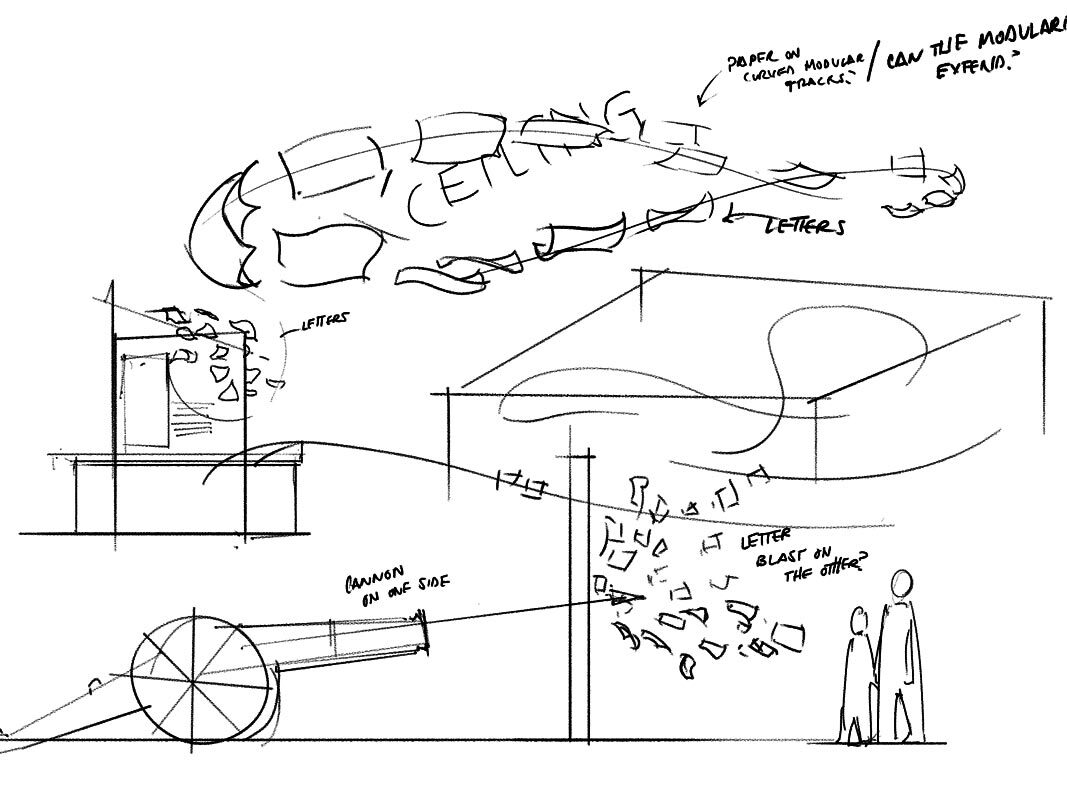
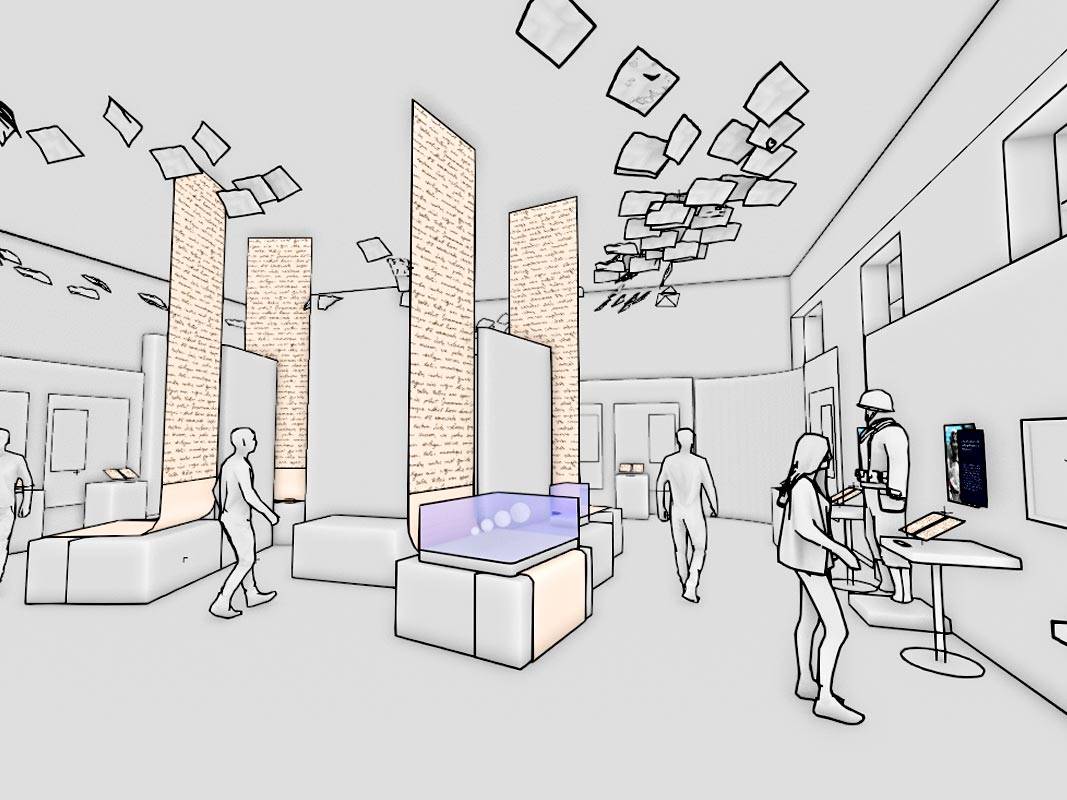
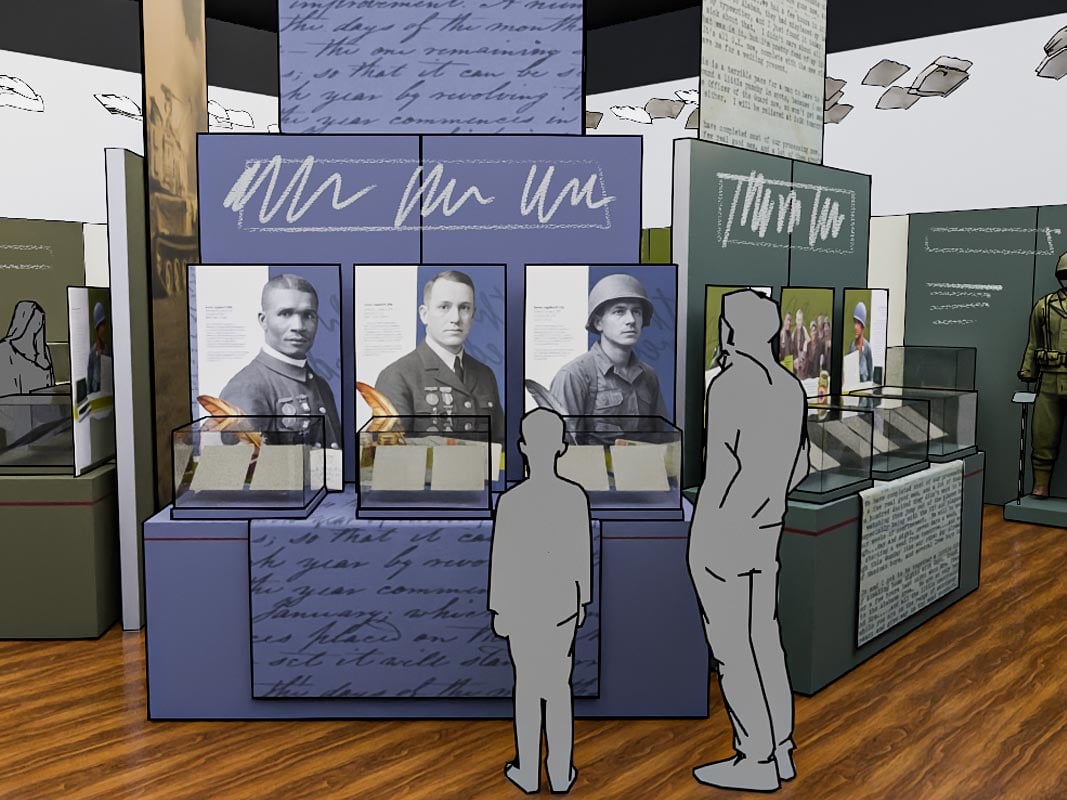
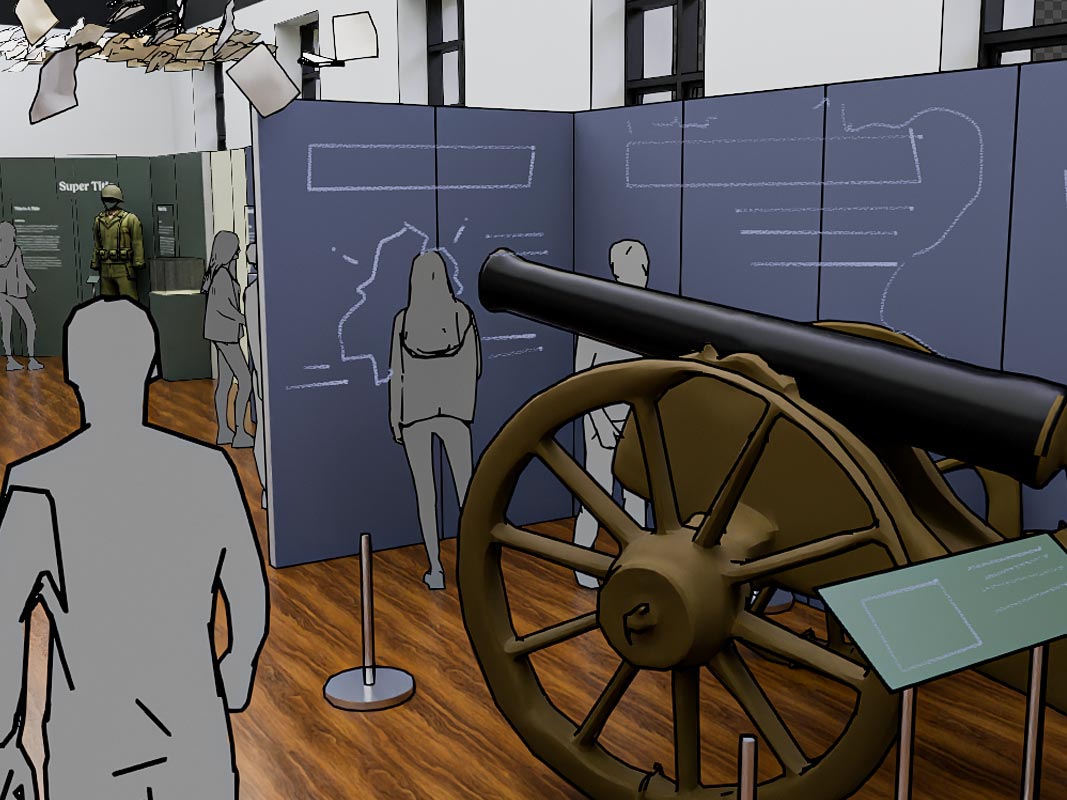
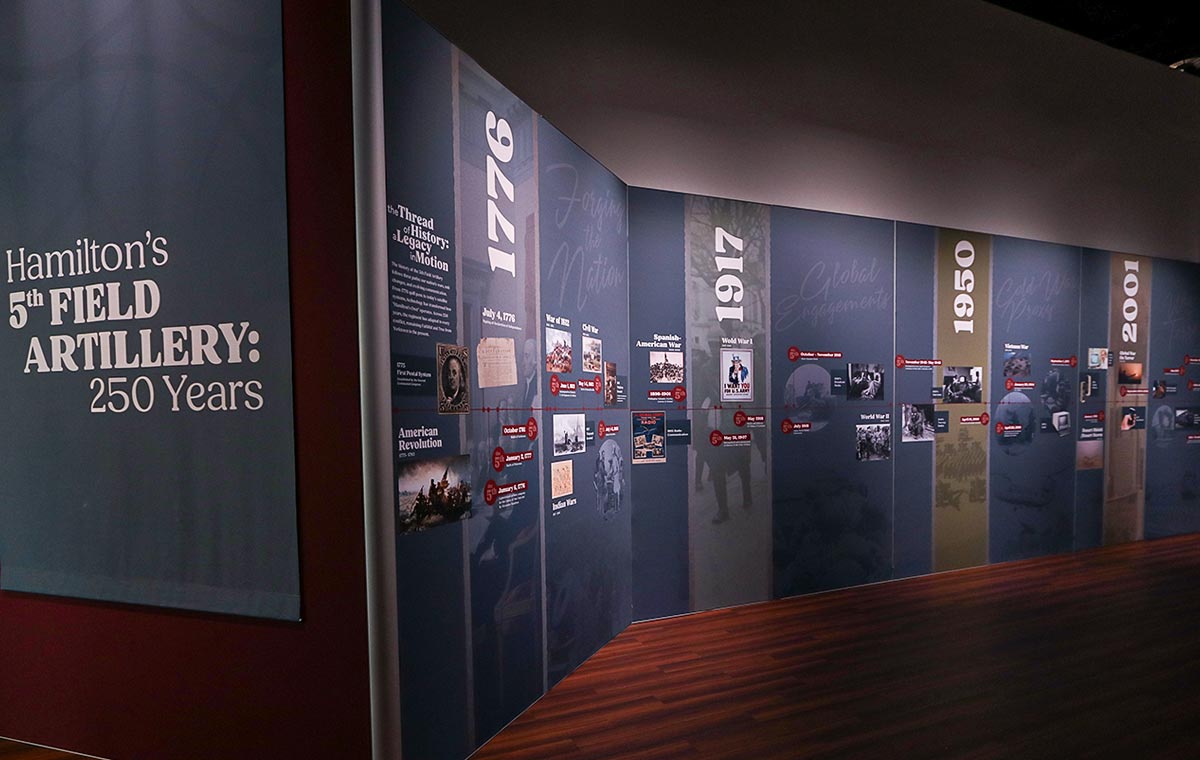
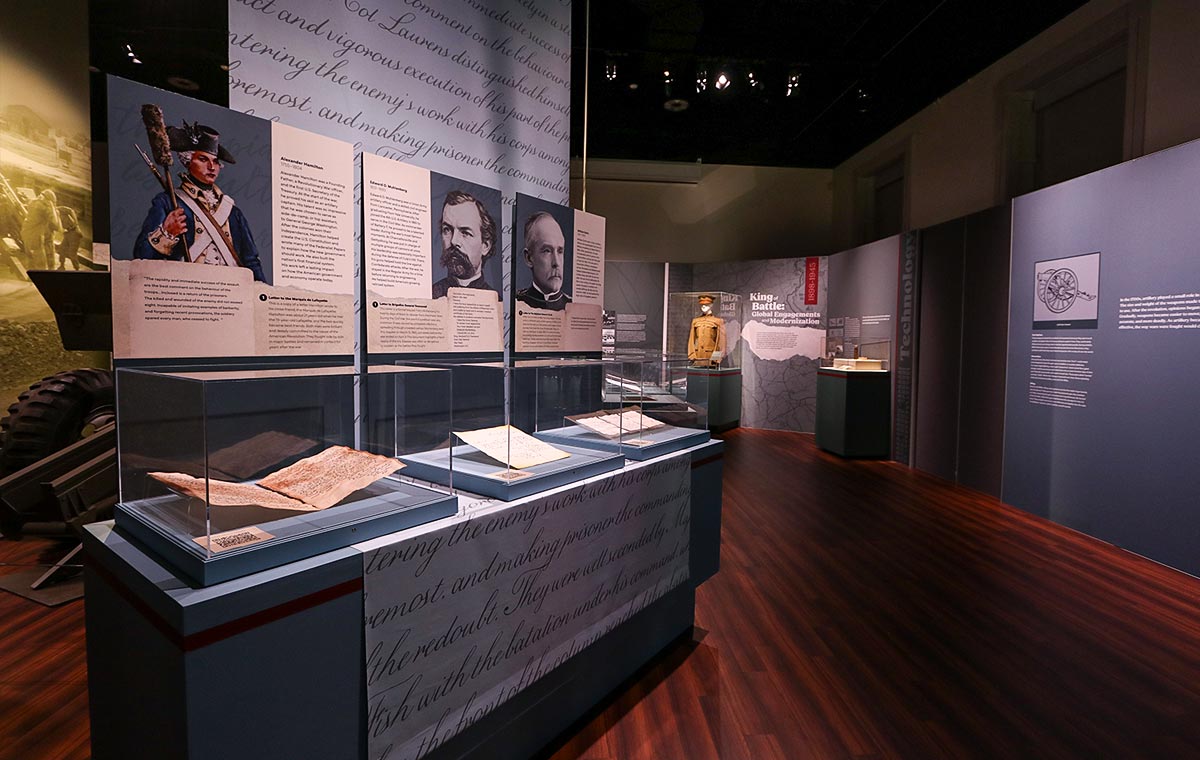
The museum came to Bridgewater with deep historical research and a clear body of content. Our role was to shape that material into a story visitors could experience as they moved through the space. Organized chronologically, the exhibit reveals how dramatically artillery and communication technology changed over 250 years while showing how familiar the human experience remained. Letters became a natural thread through that story, connecting Hamilton’s handwritten correspondence to wartime letters home and modern day digital communication.
Design
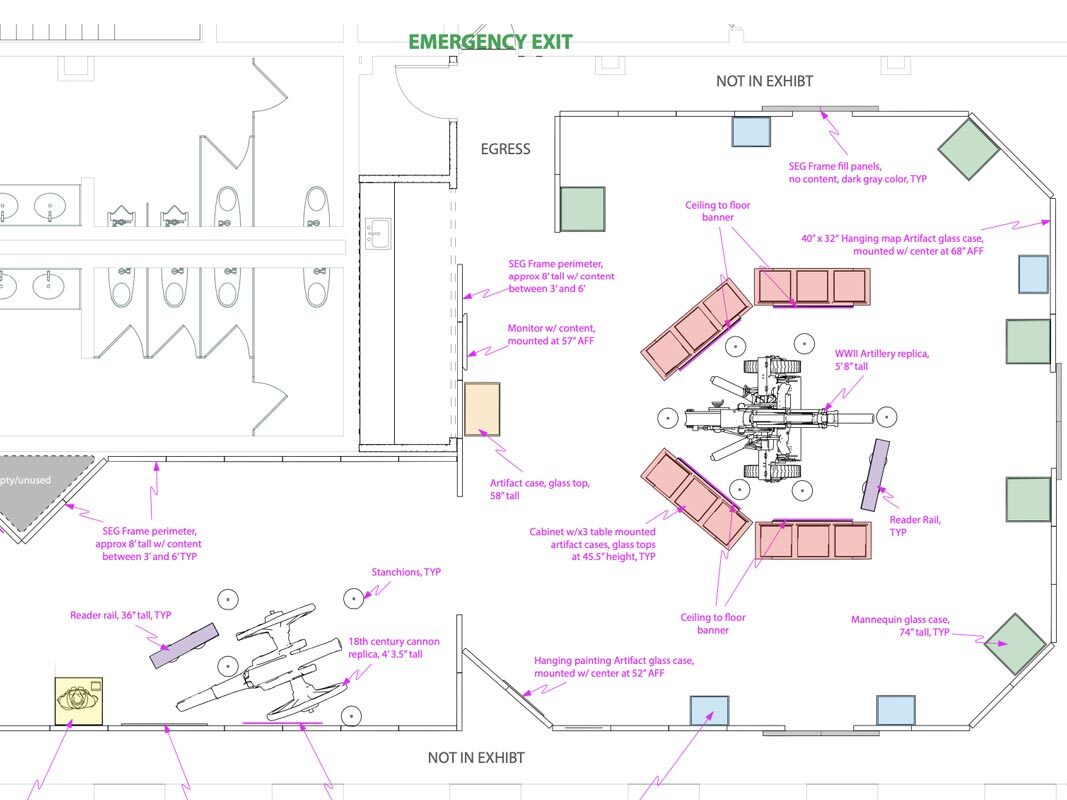
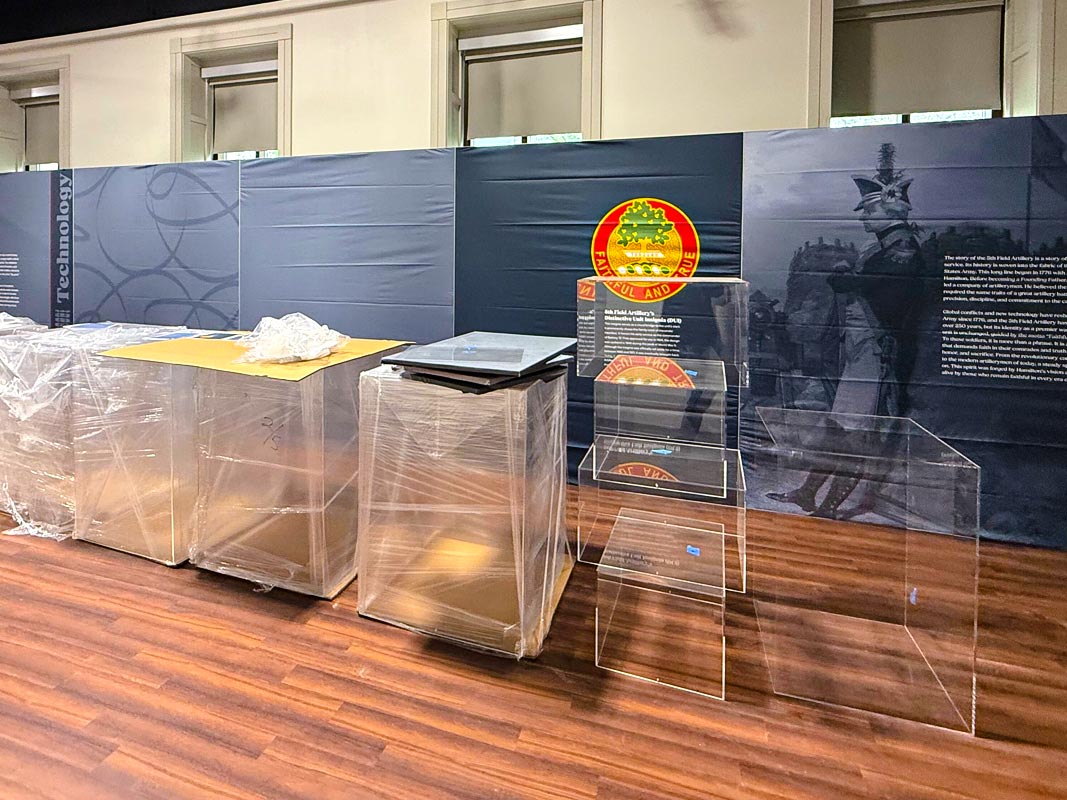
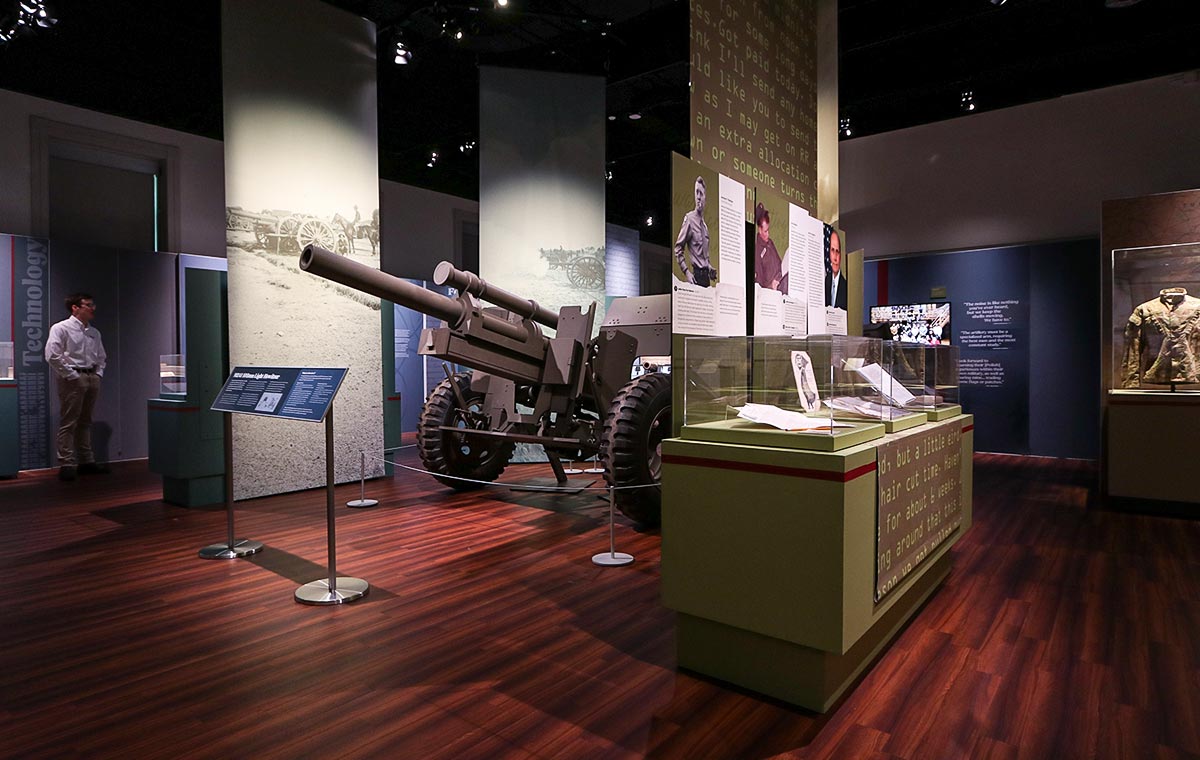
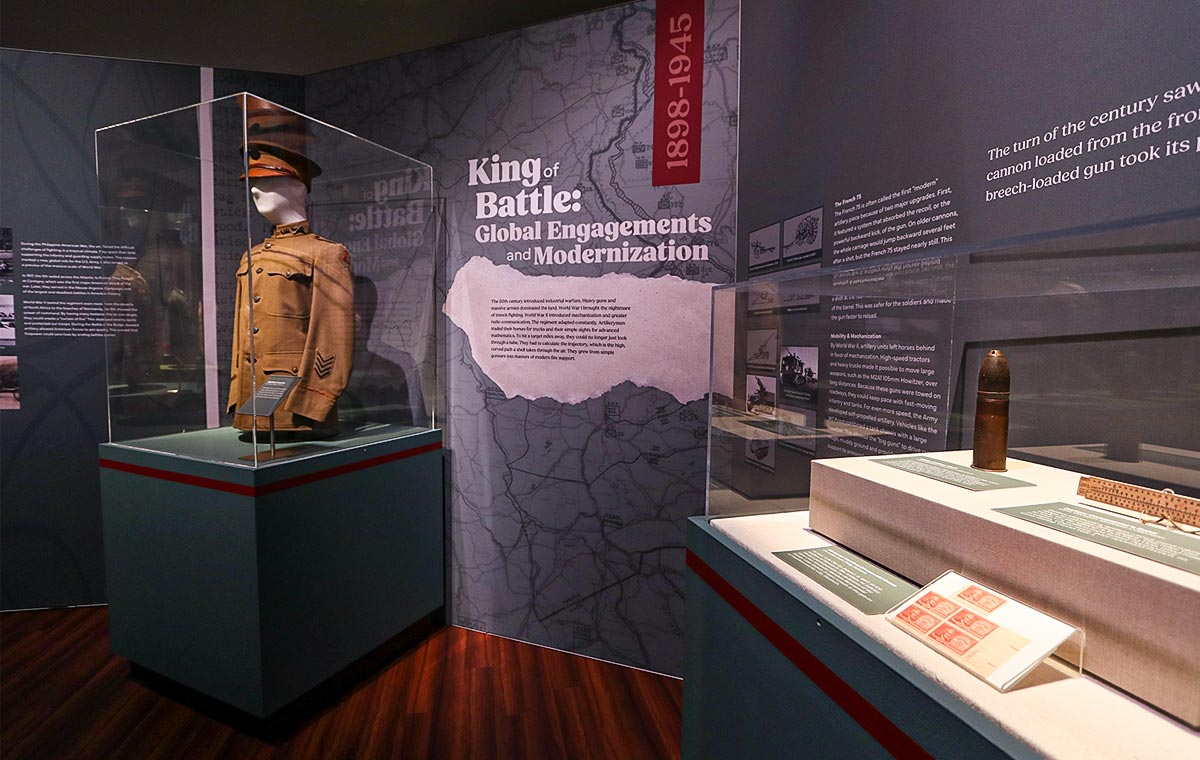
That narrative informed how the exhibition was organized spatially, from the placement of uniforms, flags, maps, and letters to the scale and position of the two artillery units. A flexible system of aluminum frames and fabric graphics was designed to support the traveling format without diminishing the experience. For the replicas, Bridgewater explored materials, construction methods, and finish treatments that could deliver historical character with minimal weight. The goal was to strike the right balance between newly built and appropriately aged.
Production
Once design decisions were finalized, our in-house fabrication team translated them into durable touring components. Steel gave the howitzer barrel the solid presence visitors would expect, while wood and 3D-printed parts reduced weight elsewhere. On the Revolutionary War cannon, 3D printing made it possible to recreate intricate period details without heavy materials or hardware. The team also refurbished existing casework, produced custom conservation framing, handled graphics and printing, and coordinated lighting design with a trusted partner.
Gallery